Elastic Fiber Regeneration
Adventitial Stem Cells
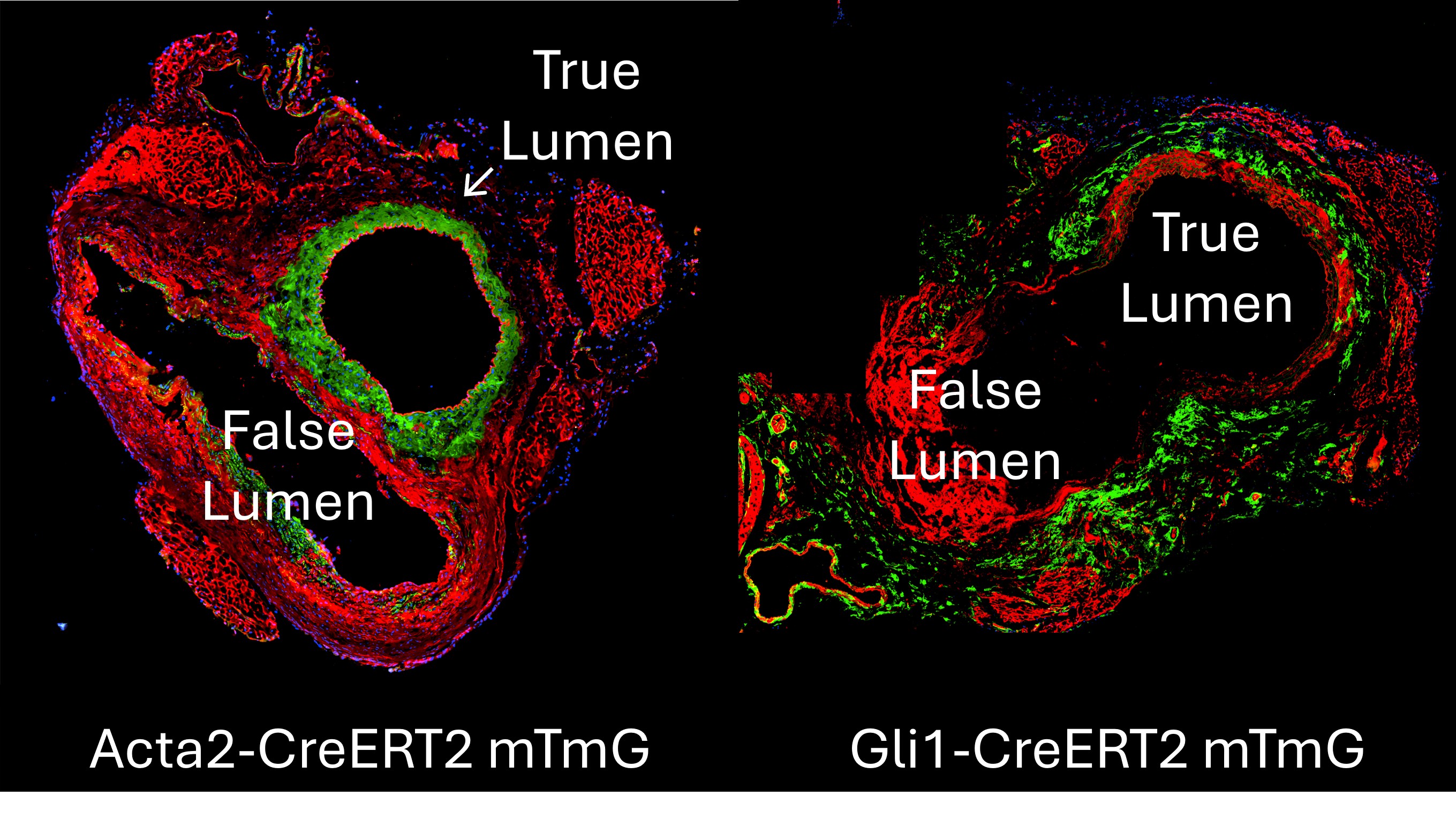
We have further uncovered cellular mechanisms of elastic fiber regeneration. Using the lineage-tracing models Acta2-CreERT2 mTmG, the cellular composition of the false lumen wall after aortic dissection was examined. Unexpectedly, we found that only a limited proportion of the false lumen wall was derived from pre-existing smooth muscle cells (green), indicating that other cellular sources contribute to tissue reconstruction.
In contrast, lineage tracing using Gli1-CreERT2 mTmG mice demonstrated extensive green signals throughout the false lumen wall, indicating that most of these cells originated from Gli1-positive stem cells residing in the aortic adventitia. These findings indicate that adventitial stem cells contribute to elastic fiber regeneration following aortic dissection.
Toward Regenerative Therapies
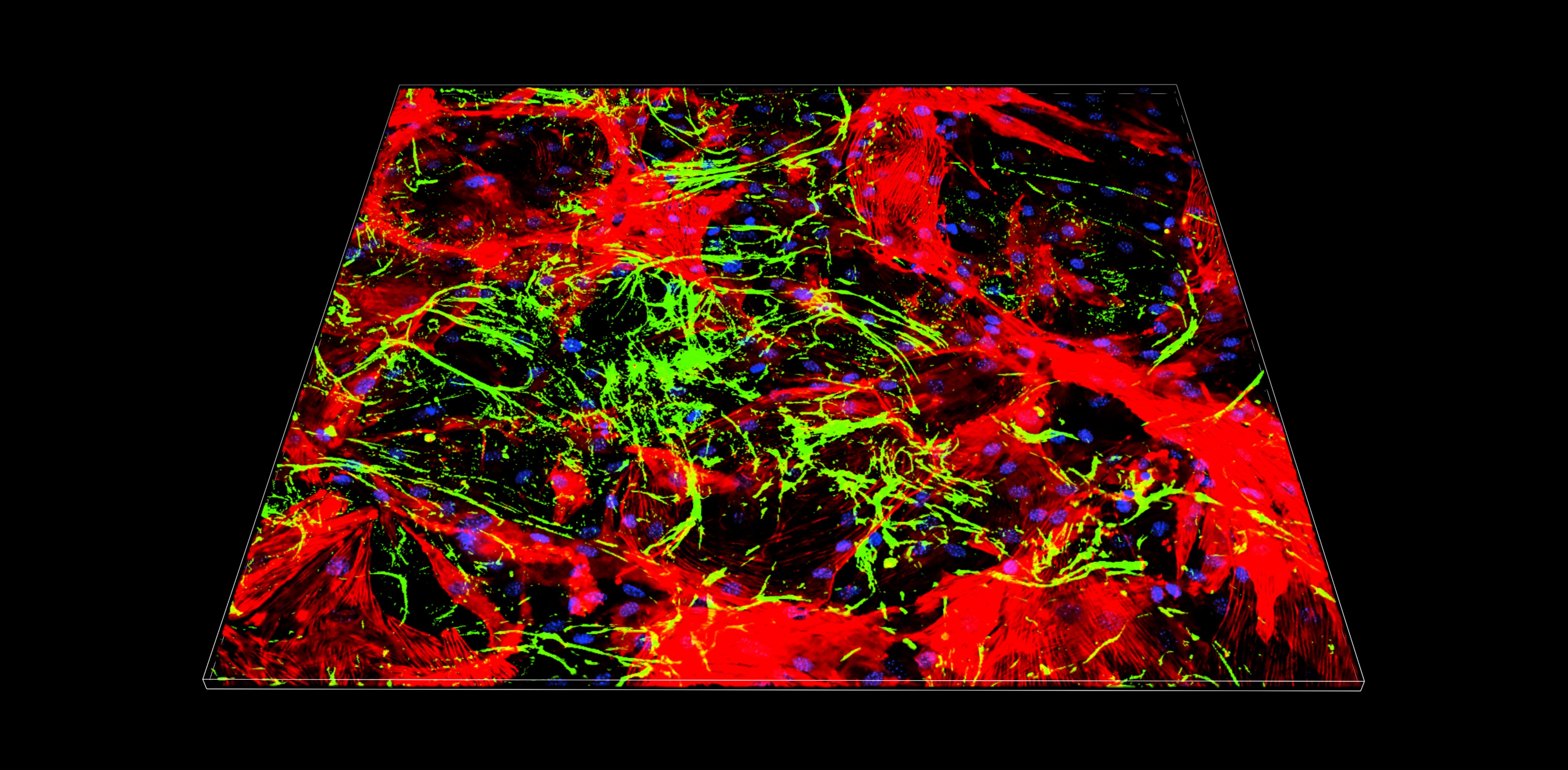
In vitro studies using Gli1-positive stem cells have demonstrated that these cells (red) are capable of synthesizing elastic fibers (green). Because elastic fibers are indispensable for preserving the structure and function of the aorta, we hypothesize that de novo elastic fiber formation serves as a protective mechanism in vascular disease.
Building upon these findings, our current research seeks to determine whether newly synthesized elastic fibers can be harnessed as a therapeutic target for aortic diseases. We are particularly interested in understanding whether enhancing this regenerative process could promote aortic repair and improve clinical outcomes. By integrating approaches in cell biology, molecular biology, lineage tracing, and multi-omics analyses, we aim to uncover the cellular and molecular programs underlying vascular regeneration.
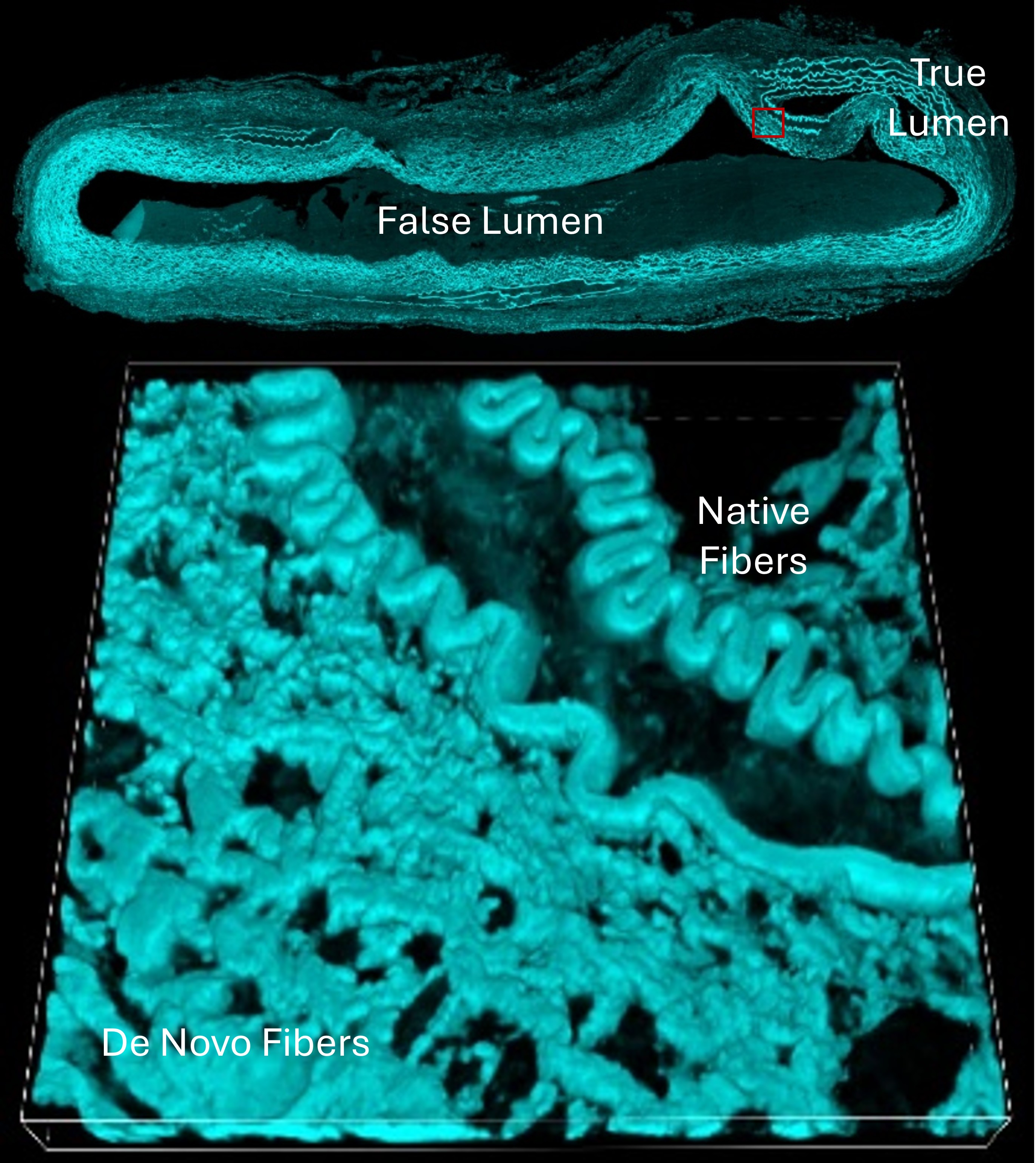
However, our studies have revealed that elastic fibers are newly synthesized in several types of aortic disease. The image above illustrates aortic dissection in model mice, in which a pathological blood-filled channel (false lumen) develops alongside the normal aortic lumen (true lumen). Within the wall of the false lumen, we identified newly formed elastic fibers (de novo fibers), providing evidence that the injured aorta retains an unexpected capacity for elastic fiber regeneration.